Explainer storyboard
What matters most in a moodboard for AI video
15 frames · 54.6 s · 1920×1080 · text-led, works muted · watch the video
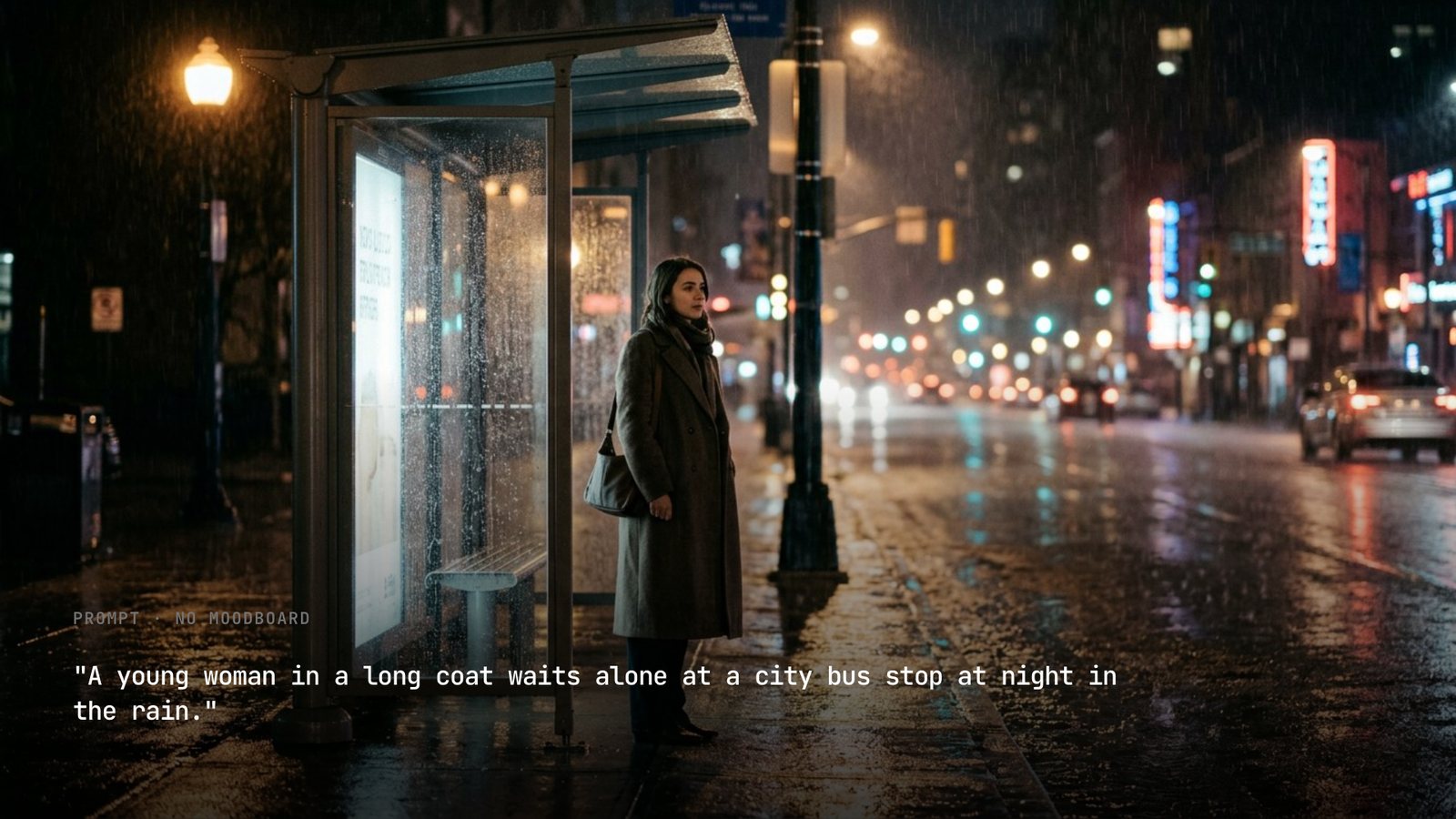
The same prompt with no moodboard: a stock-looking street, mood left to the model.
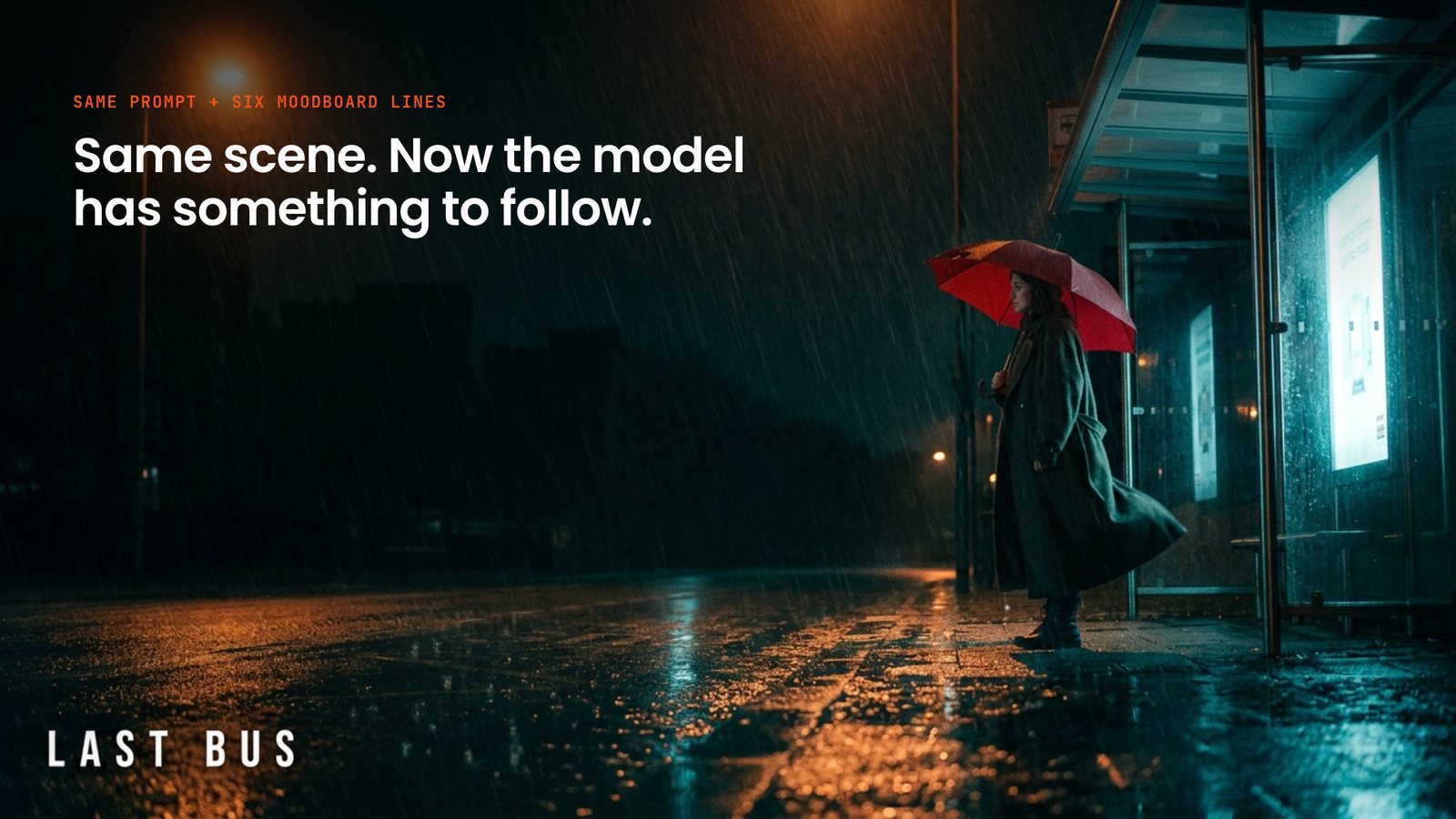
Same prompt plus six board lines: the light, palette, framing and title land where the board put them.
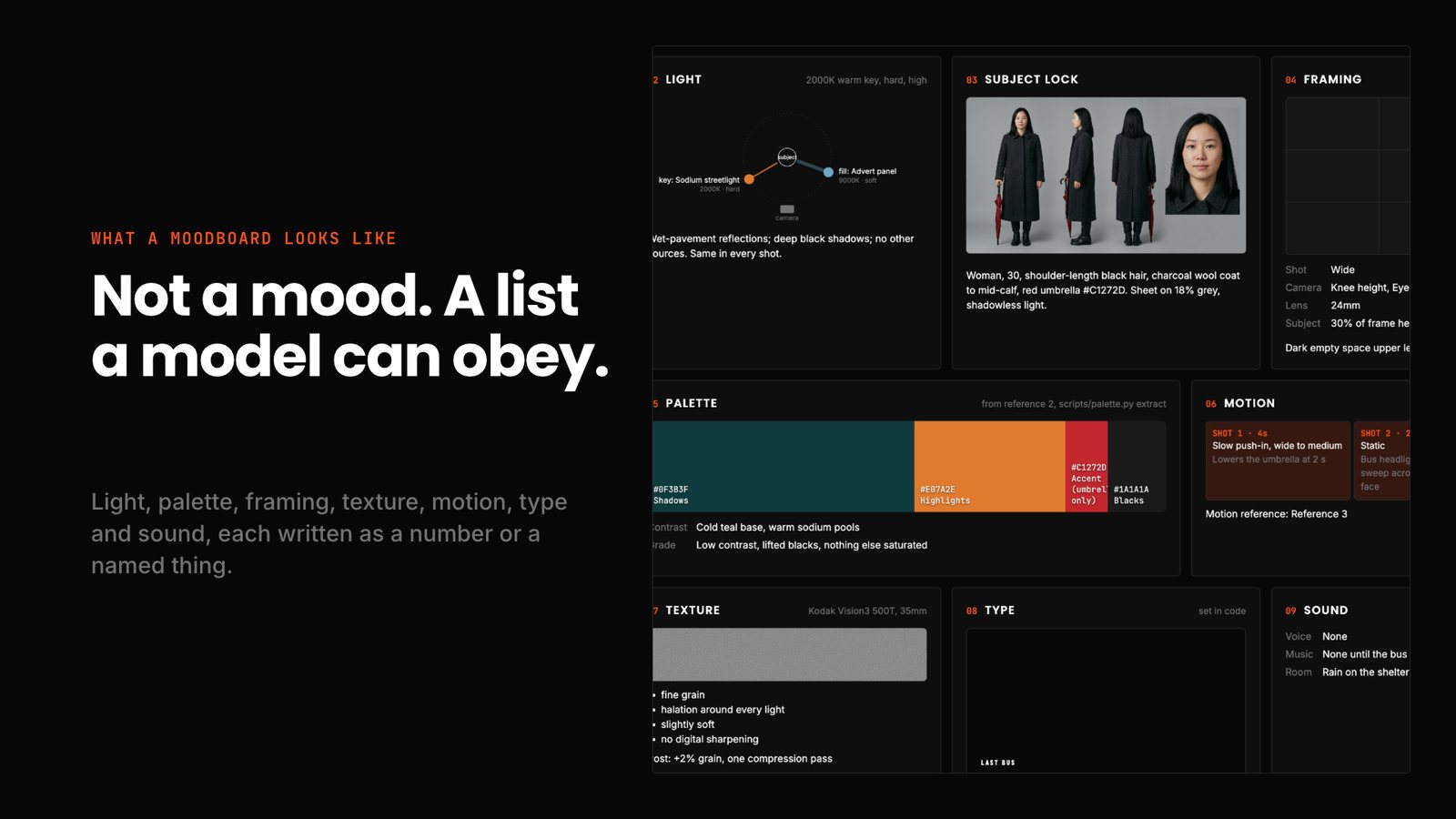
What a moodboard looks like: the board.html from the skill, panning over light, palette, framing, texture, motion, type.
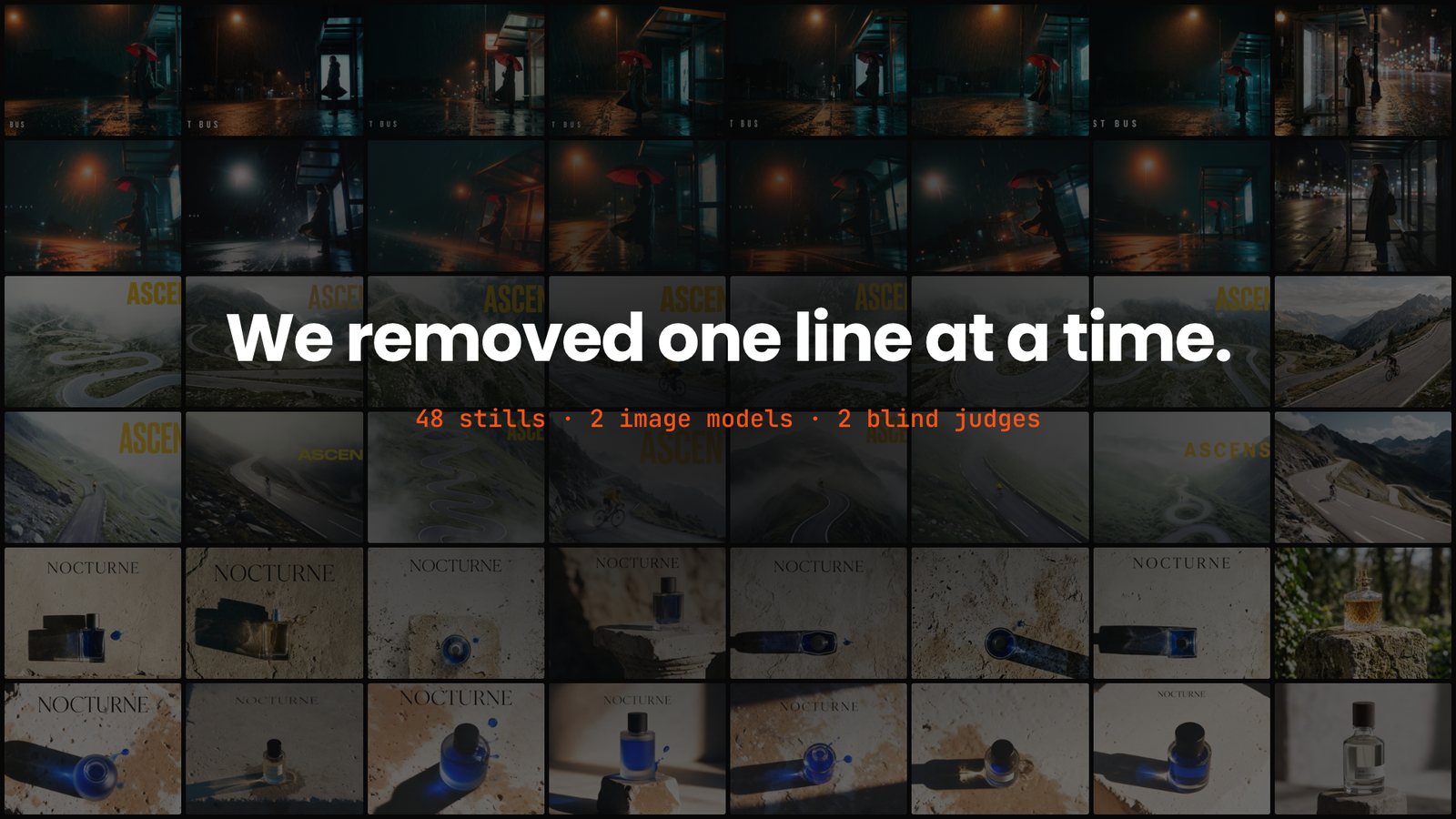
How we know: each line removed in turn, 48 stills on Nano Banana 2.1 and Seedream 5 Pro, two blind judges.
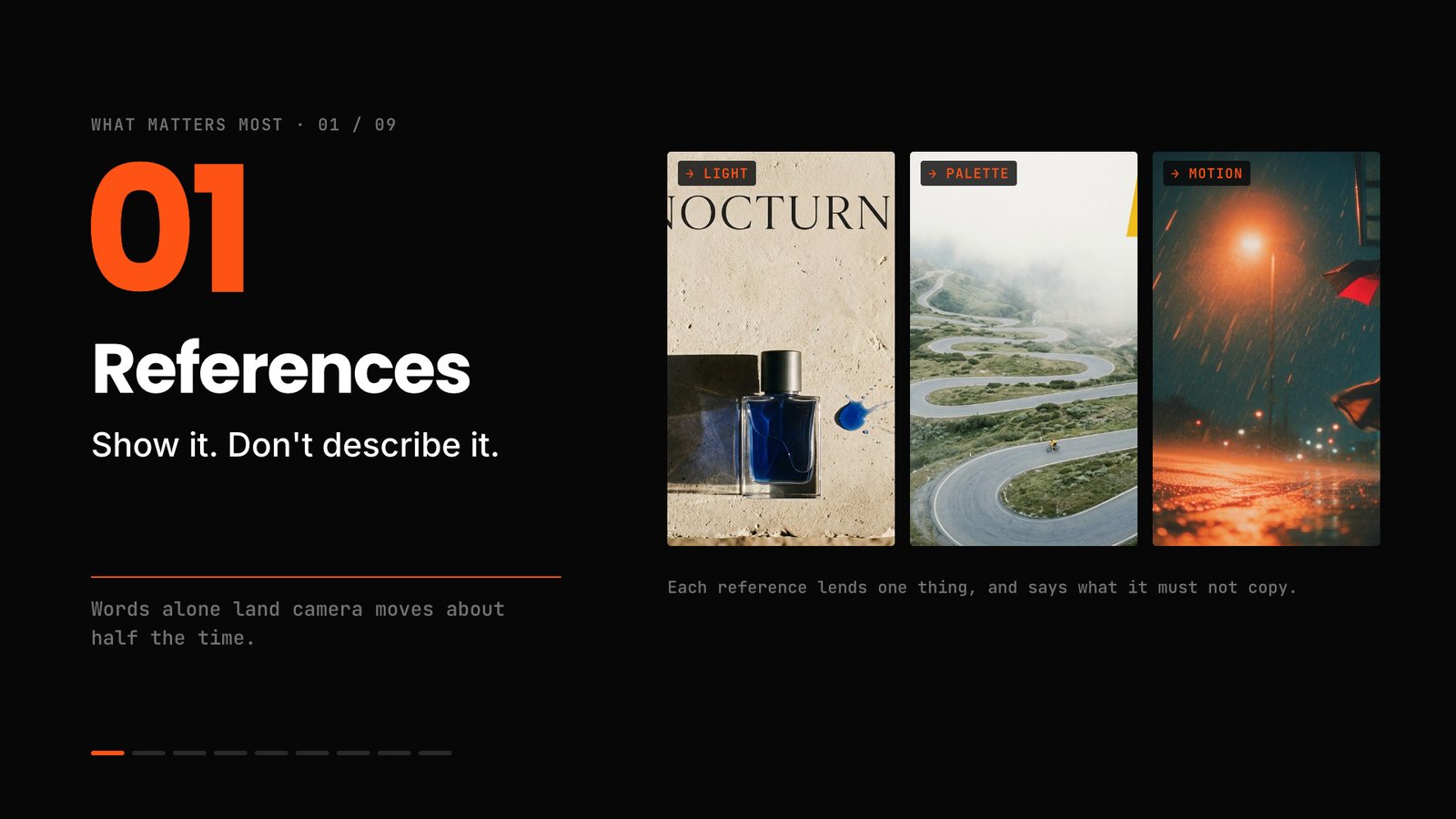
Rank 1, References: each reference lends one thing. Words alone land camera moves about half the time.
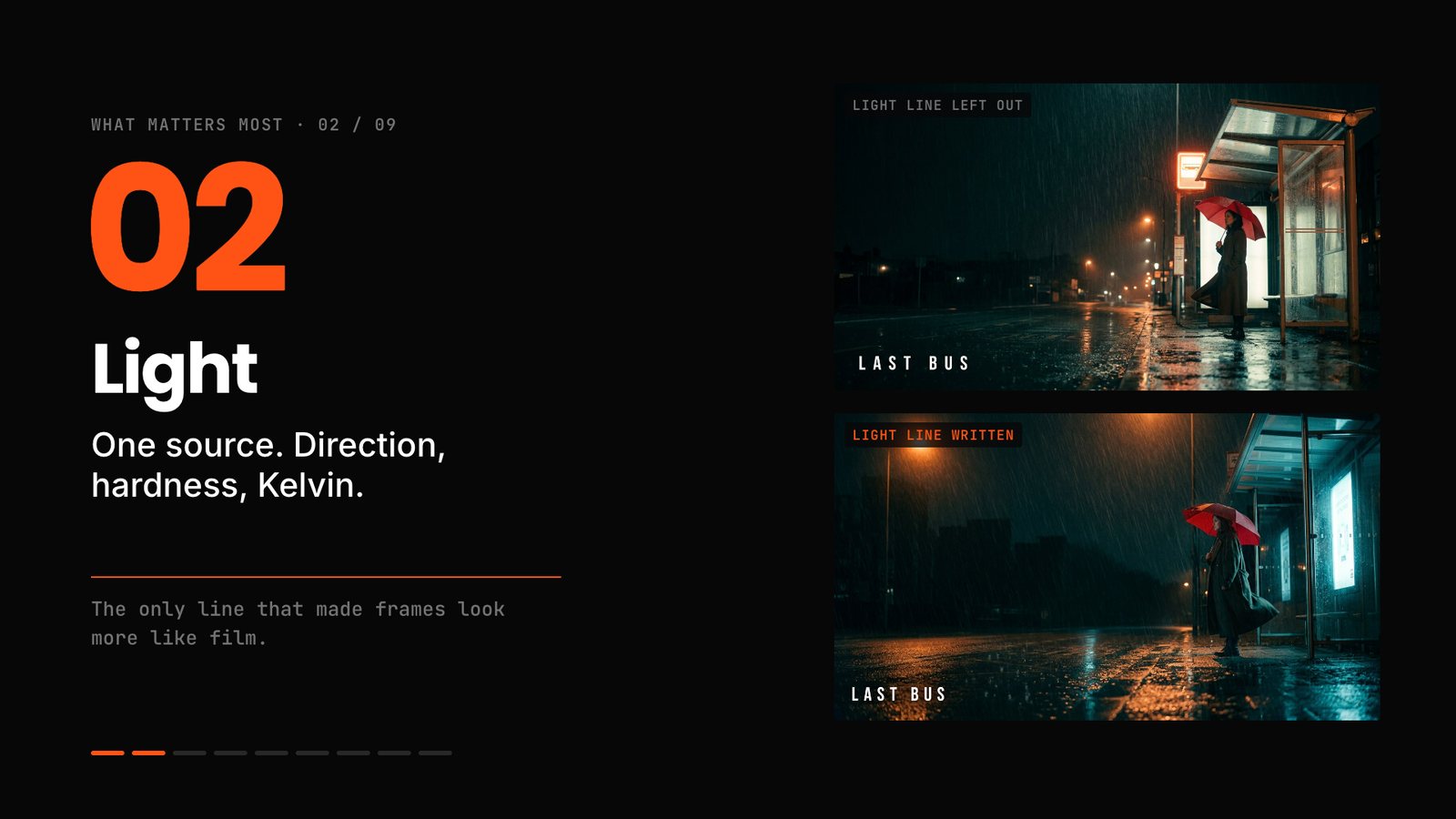
Rank 2, Light: light line left out vs written. The only line that made frames look more like film (+0.50).
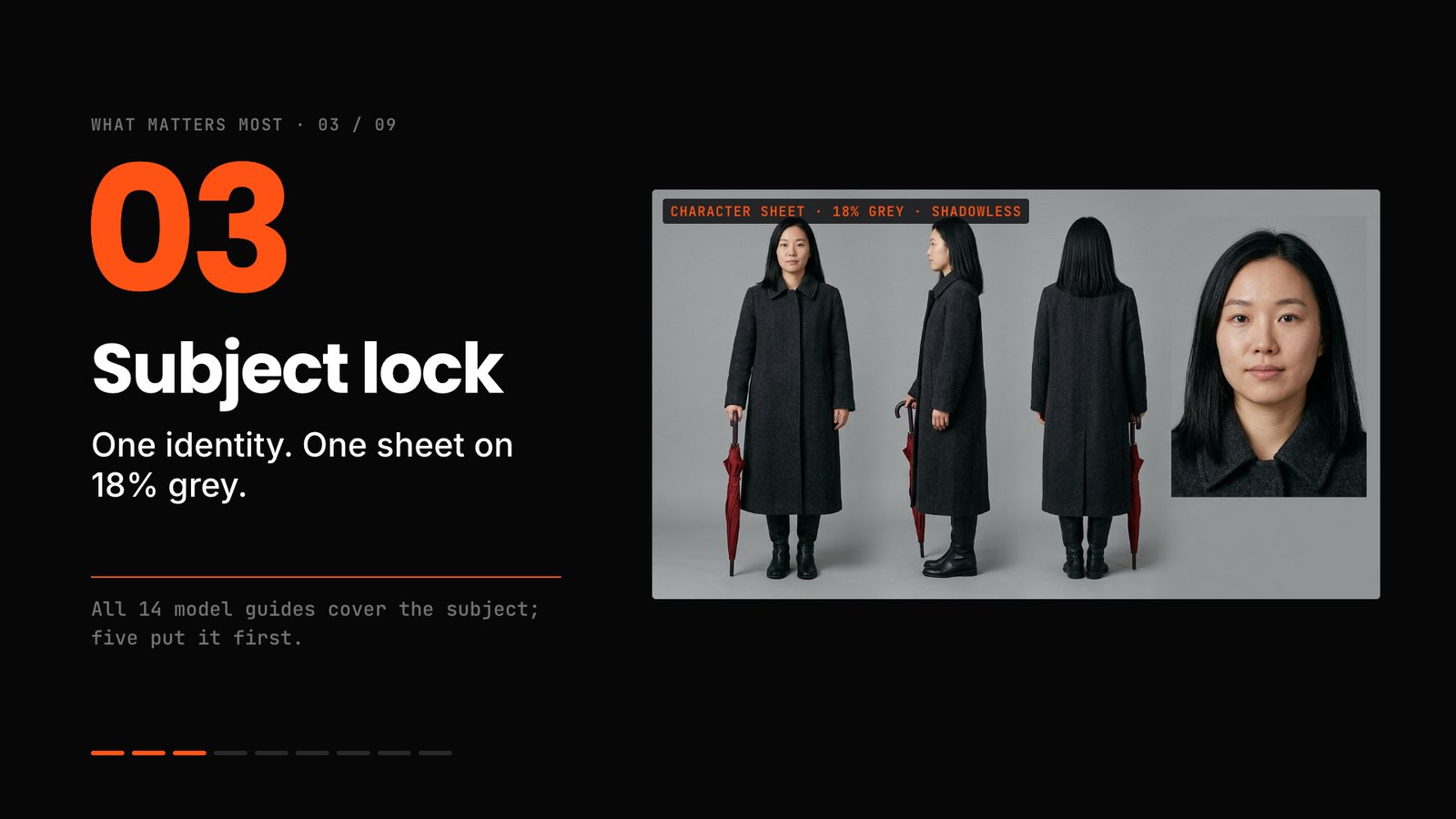
Rank 3, Subject lock: a character sheet on 18% grey, shadowless. All 14 guides cover the subject.
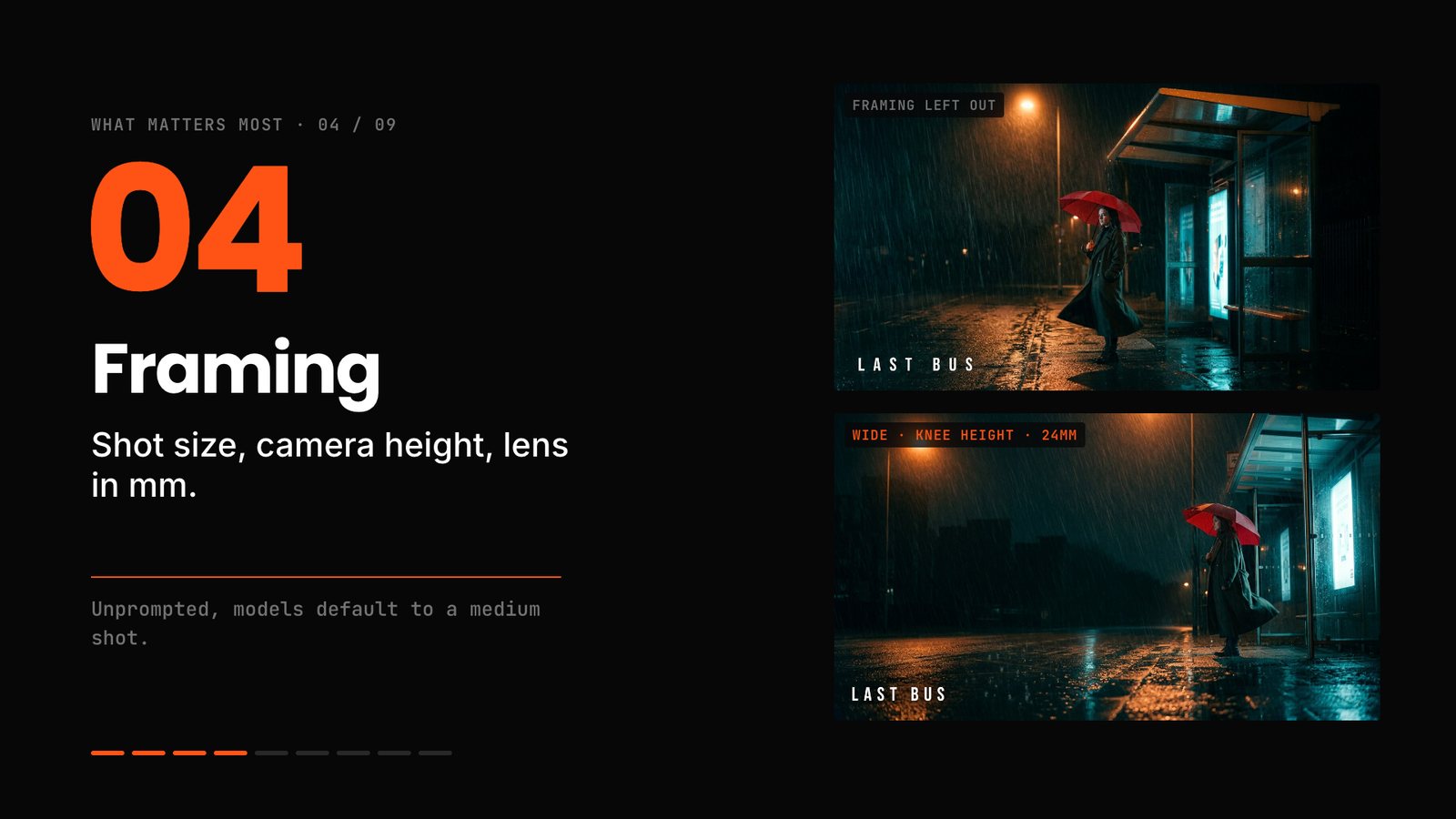
Rank 4, Framing: left out, the model picks a centred medium-wide; written, wide from knee height at 24mm.
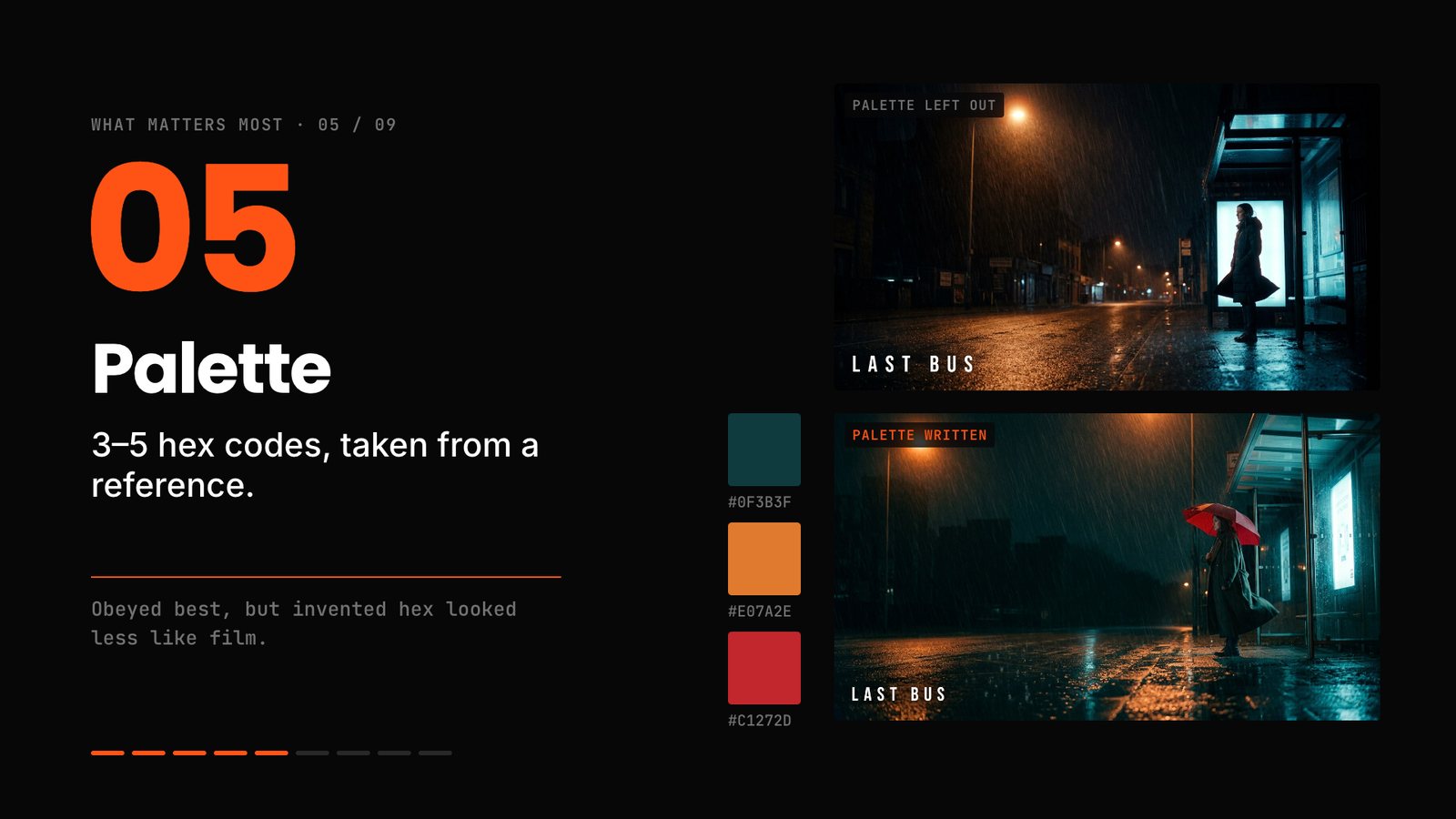
Rank 5, Palette: left out, the red accent disappears. Obeyed best, but invented hex looked less like film.
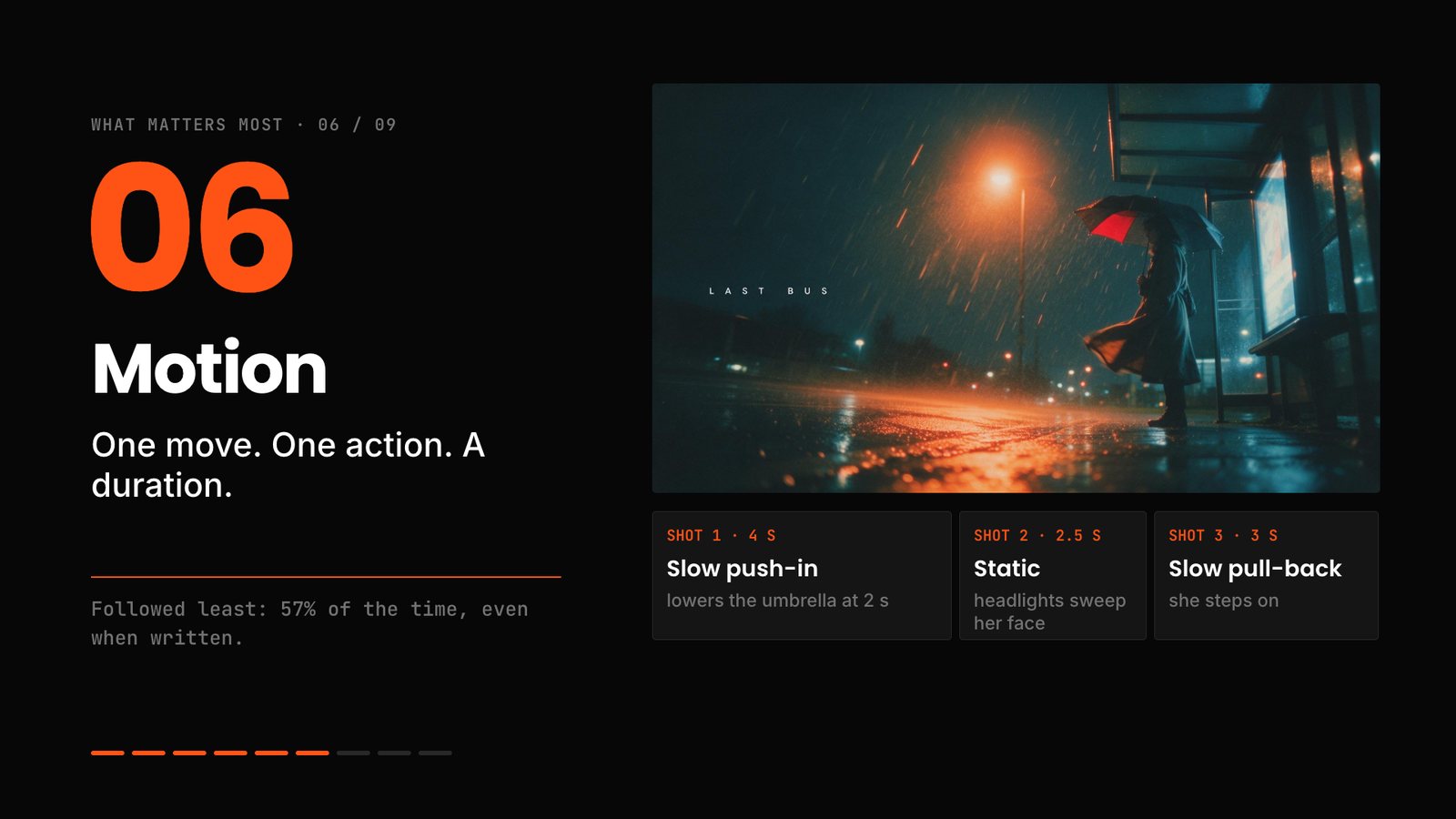
Rank 6, Motion: one move, one action, a duration per shot. Followed least: 57%.
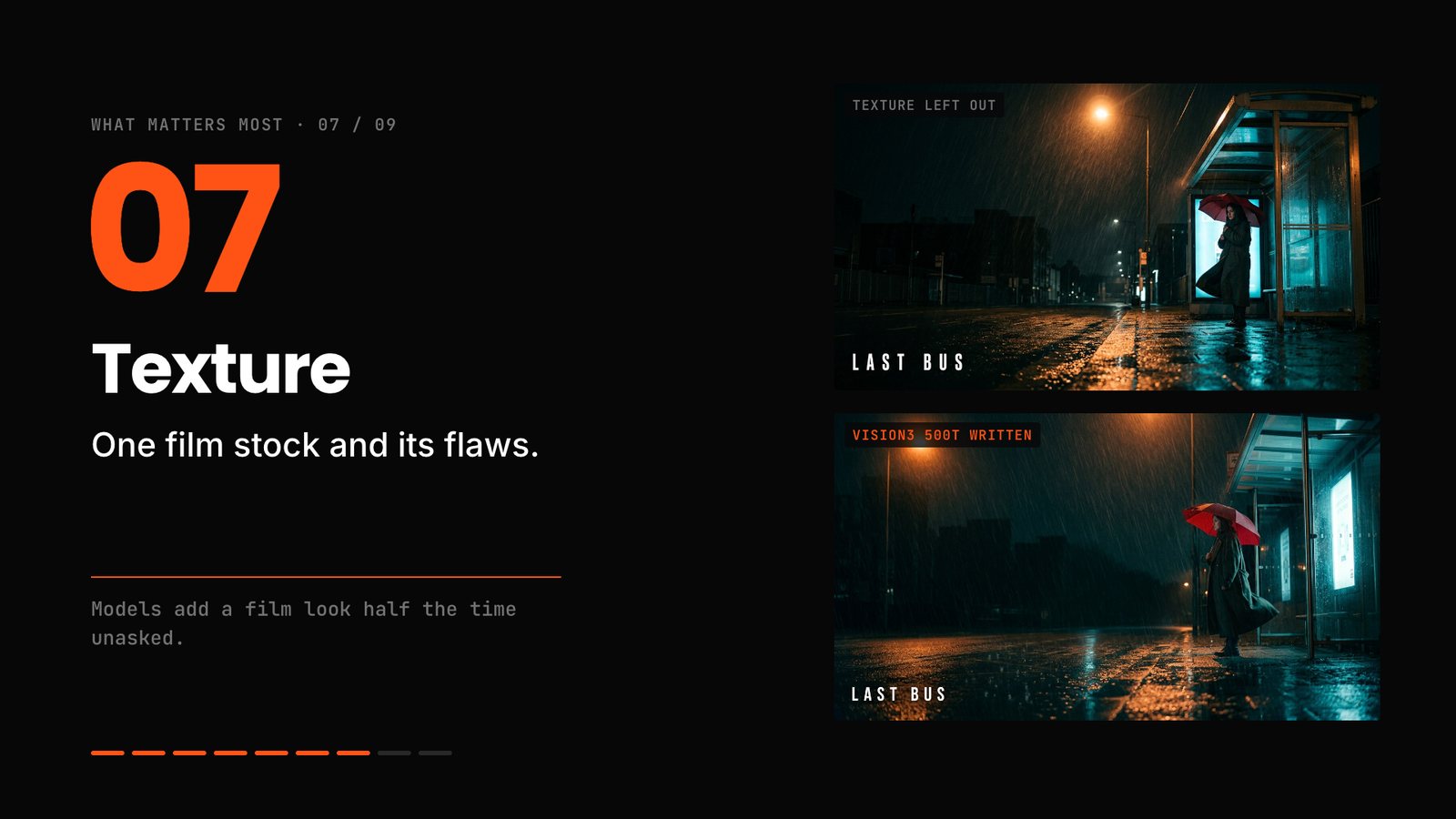
Rank 7, Texture: left out vs written look alike, because models add a film look half the time unasked.
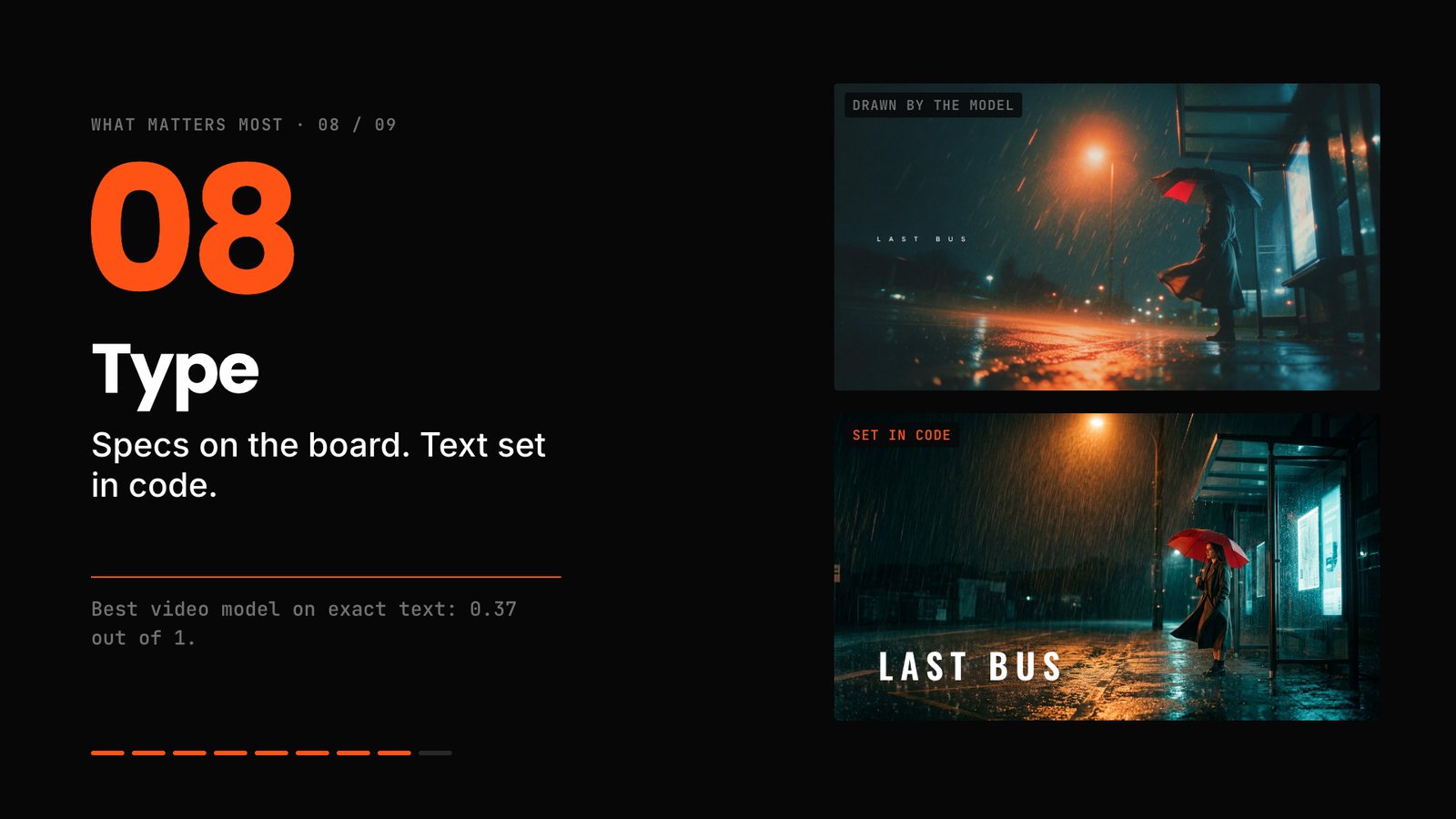
Rank 8, Type: the model's title is tiny and off-spec; set in code it lands exactly.
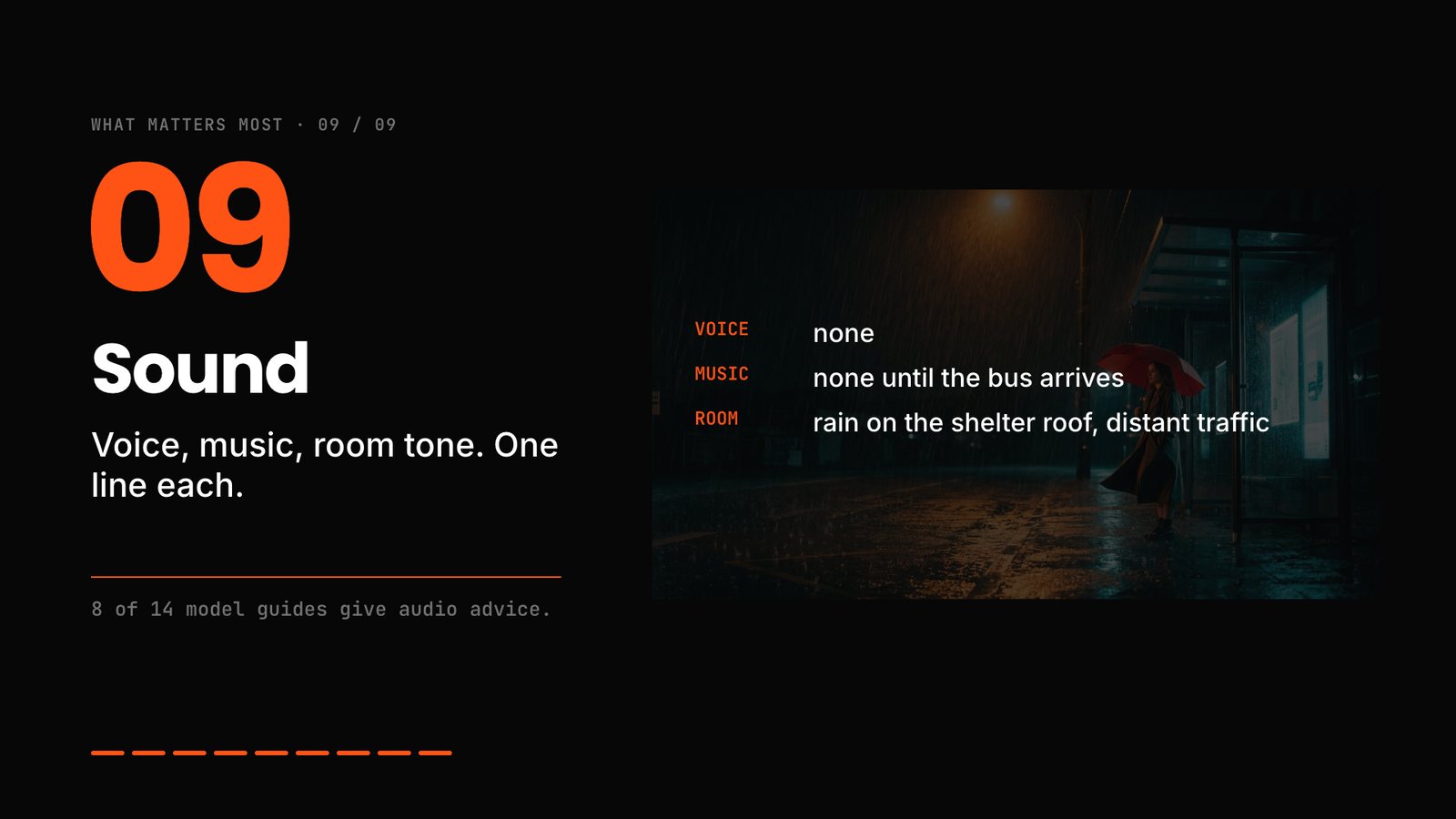
Rank 9, Sound: one line each for voice, music and room tone.
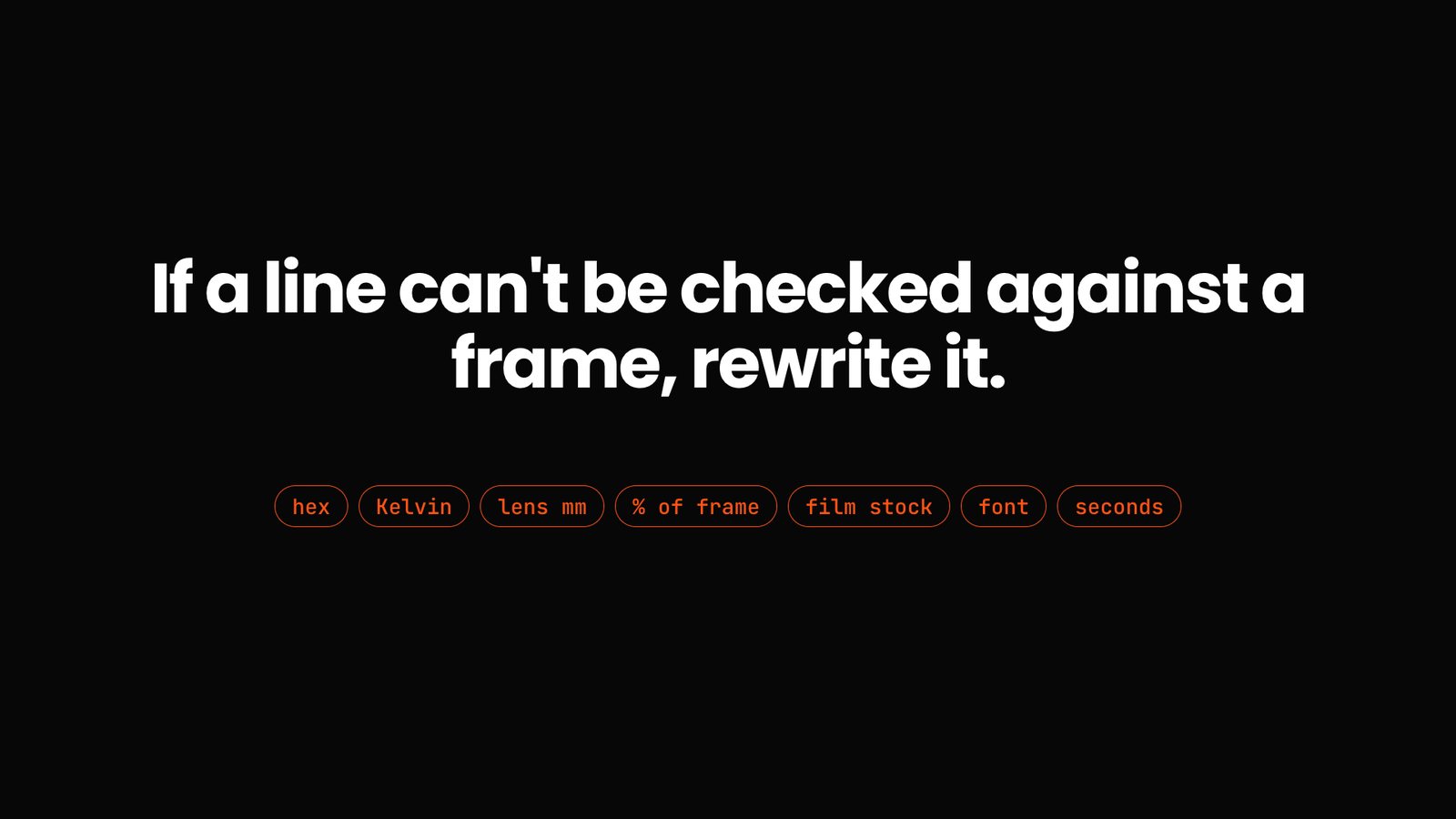
The rule: if a line can't be checked against a frame (hex, Kelvin, mm, %, stock, font, seconds), rewrite it.
Two free skills: find-references, then video-moodboard. varg.ai/how-to, github.com/vargHQ/skills.